English
 Chinese (Simplified)
 Chinese (Traditional)
 Filipino
 Japanese
 Korean
 Lao
Lao Malay
Malay Spanish
 Thai
Thai Vietnamese
What Youth Know About Dating Violence That Adults Need to Hear
Youth Advisory Council · Teen Dating Violence Awareness Month
February is Teen Dating Violence Awareness and Prevention Month (TDVAPM). We asked three members of APILO’s Youth Advisory Council (YAC) to write about what they see, who they trust, and what they wish adults understood. Their answers are grounded in lived experience — and backed by the research.
What We See Our Friends Go Through
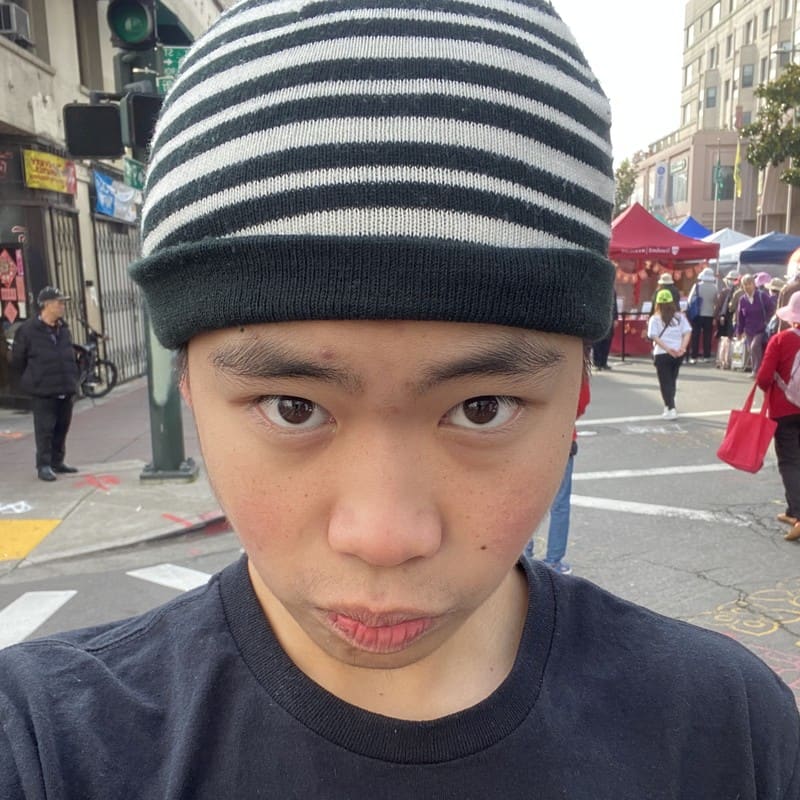
Justin L., he/him
1st Year YAC Member
“It’s no secret that people in my friend group are and were dating, with frequent social media posts about them, and always walking around the halls holding hands. Their relationship was strong until a few weeks in. People often leave their group to hang out with their partner, which initially did happen, but my friend started hanging out with the group more. He started to talk more about the relationship with us, mainly about the bad, but the bad left me feeling conflicted.
Should I intervene? I chose to do so, and I asked him about it online. He told me the attraction was lost, but he didn’t want to leave. It felt foreign, and I couldn’t understand why he chose to stay, so I asked, and the answer was that he just didn’t want to be single. I didn’t feel that it was my place to condemn him, so I told him I’d always be here to talk.”
Approximately 1 in 12 high school students who dated in the past year experienced physical dating violence, and 1 in 10 experienced sexual dating violence.[1] Pro-social friendships — the kind that provide self-esteem support, loyalty, and real presence — reduce dating violence by 37%.[2] The friend who shows up consistently is not a bystander. That friend is a protective factor.
It is our responsibility as adult allies to equip young people with the tools to support their friends. This is what a lot of us have experienced with our friends and loved ones. We watch our friends go through things we can see clearly from the outside, and we hold space without forcing an outcome. Dating violence violates the survivor’s agency. It’s important that we support (adult and youth) survivors and go at a pace where they are able to re-learn and restore their agency.
What Makes an Adult Safe to Talk To?
Justin L., he/him
1st Year YAC Member
“Young people need support during adolescence, when the most mental changes occur. During this stage, young people begin to be self-conscious, often fitting into social norms, and exploring who they are. Because of this, adults have to take action to build trust, not by asking when something seems off, but every day.
When told, adults usually push for an answer, turn it into a lecture, or completely dismiss it. They often don’t understand that the young person is still trying to figure it out themselves. Adults should support by asking the youth for their thoughts more. If they don’t have an answer, make sure it is a safe space to share when they do by always checking in.
A young person has to know they won’t be shamed, be respected, and have a choice to share when opening up.”
Most young people are keenly aware of the interactions that they have with adults. As adults, we need to be attentive to the needs of young people in our lives. Pause. Slow down. Ask questions to understand, not to prescribe action through lectures and chastising.
Meaningful adult communication reduces teen dating violence by 20%.[2] Unfortunately, this protective factor is unevenly distributed. Only 77% of youth experiencing homelessness report having a meaningful adult connection, compared to 87% of housed youth. The adults who build trust through daily consistency — not reactive intervention — are the ones young people turn to when it matters.
Who Models Healthy Relationships in Your Life?
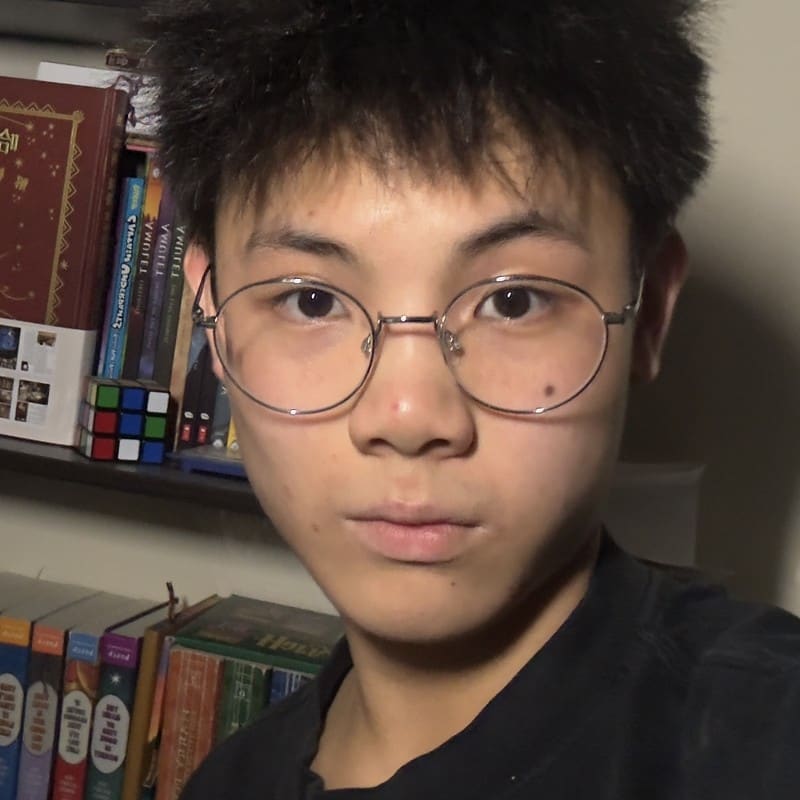
Zhiqin C., he/him
1st Year YAC Member
“Nobody has been more present in my life than my mother, who managed to rack up the immense amount of patience and strength required to raise me.
My mother has been modeling what healthy relationships should look like in the background for a long time — before I ever came up with my own definition for what we call a “healthy” relationship. Many of her key principles have helped mold what I believe to be healthy relationships, and so it’s vital for all youth to have people in their lives they can learn from.
My mother taught me the importance of handling disagreements critically, calmly, open-mindedly, and with the willingness to understand others’ perspectives.
I can’t think of a better way to visualize the importance of handling disagreements correctly than in looking back on your favorite movies and TV shows! They’ve shown how mishandling disagreements will escalate the situation and only lead to the destruction of relationships that were built over lengthy screen time, or in the real world, even years — in an instant.”
The research catches up to what Zhiqin already knows. A meta-analysis of 87 studies involving 278,712 young people confirmed that warm family relationships, parental support, and parental monitoring are among the strongest protections against dating violence.[3] Youth learn relationship skills from observation, not lectures. Zhiqin’s mother was modeling healthy conflict resolution before he had the language for it. That is what effective prevention looks like at the family level.
Not all young people have that model. Youth in foster care, juvenile justice settings, and experiencing homelessness often lack consistent adult relationships.[2] The gap is structural, not personal. And when institutions fail to provide what families cannot, young people are left without the foundation the research says they need.
Where We Learn What Relationships Look Like

Saesha P., she/her
2nd Year YAC Member
“Young people learn what relationships should look like from social media, TV, and the adults around them, but those lessons are often distorted. Social media often masks unhealthy relationships behind perfectly posed images. Meanwhile, entertainment frequently portrays jealousy, control, or manipulation as passion, teaching that harmful behavior can be justified in the name of love. When these patterns repeat, they quietly normalize unhealthy dynamics and blur the line between care and control.
What’s missing are honest examples of relationships grounded in respect, communication, and independence. Without those models, young people may mistake intensity for intimacy and silence for strength.
The problem deepens when queer relationships are rarely represented. When lesbian, gay, bisexual, transgender, and queer (LGBTQ+) youth cannot see healthy relationships that reflect their own experiences, they are pushed to the margins of conversations about love and safety. Representation is not just visibility. It is guidance. Without inclusive, realistic examples, young people are left to define relationships through incomplete and sometimes harmful narratives.”
In a national study, 28% of students in a relationship experienced digital dating abuse — monitoring through social media, location tracking, repeated contact without consent.[4] The 2021 Youth Risk Behavior Survey showed physical and/or sexual dating violence was reported at 8% among male respondents and 19% among female respondents.[1] LGBQ+ students were twice as likely to experience unstable housing.[5] Hawaiian and Pacific Islander GBQ boys reported the highest rates of physical (29%) and sexual (32%) dating violence nationwide.[1]
Saesha names what many adults struggle to articulate. The sources young people draw from to understand relationships are saturated with distortion. And for queer youth, the absence of representation is not a gap. It is an exclusion. When we fail to provide honest, inclusive models of healthy relationships, we leave young people to navigate with incomplete maps.
Why This Matters
These young people are not speaking from theory. They are describing what they observe in their friendships, families, schools, and feeds every day. The systems they name produce measurable harm. When we put their observations next to the research, the alignment is clear: young people already know what healthy relationships require. What they need are adults and systems willing to act on that knowledge.
That means building infrastructure, not just awareness. It means funding youth leadership programs that provide consistent mentorship and peer community — because those are the two protective factors the research identifies as most critical.[2][3] It means ensuring that prevention reaches young people who are detained, unhoused, or excluded from school-based programs. And it means centering queer youth in conversations about love and safety, not treating their experiences as an afterthought.
The Youth Advisory Council at Asian Pacific Islander Legal Outreach (APILO) does this work year-round. YAC is a paid youth leadership and violence prevention program. When young people lead, and when adults show up consistently enough to earn their trust, prevention works.
Youth-led prevention is evidence-based prevention.
Support YAC. Share this post. Keep the conversation going.
Follow APILO on social media to hear more from YAC members throughout the year. Share this post with an educator, parent, or community member who needs to hear what young people already know.
And if you’re able — donate to support youth voices and youth leadership.
This blog was co-written by Justin, Zhiqin, and Saesha — members of APILO’s Youth Advisory Council — with support from D Dagondon Tiegs, Youth Program Project Manager at Asian Pacific Islander Legal Outreach.
Sources
- Clayton, H.B., et al. (2023). Dating Violence, Sexual Violence, and Bullying Victimization Among High School Students — Youth Risk Behavior Survey, United States, 2021. MMWR Supplements, 72, 66–74.
View source ↗ - Rutman, S.P., et al. (2024). Experiences of Dating Violence and Protective Factors Among Adolescents in Vulnerable Contexts. Journal of Aggression, Maltreatment & Trauma, 33(11), 1316–1336.
View source ↗ - Hébert, M., et al. (2019). A Meta-Analysis of Risk and Protective Factors for Dating Violence Victimization. Trauma, Violence, & Abuse, 20(4), 574–590.
View source ↗ - Hinduja, S. & Patchin, J.W. (2021). Digital Dating Abuse Among a National Sample of U.S. Youth. Journal of Interpersonal Violence, 36(23-24), 11088–11108.
View source ↗ - McKinnon, I.I., et al. (2025). Unstable Housing Among LGBQ+ Youth — National Youth Risk Behavior Survey, 2021. The Journal of Adolescent Health, 76(3).
View source ↗ - CDC. (2024). Preventing Teen Dating Violence.
cdc.gov ↗

Founded in 1975, the mission of API Legal Outreach is to provide culturally competent and linguistically appropriate legal representation, social services, and advocacy for the most marginalized segments of the community including low-income women, seniors, recent immigrants, and youth.
If you want to learn more about your Youth Advisory Council, please visit
www.thatsnotlove.org